
On the morning of September 8, Karnataka Chief Minister D K Shivakumar paid a surprise visit to the Agricultural Produce Market Committee at Yeshwanthpur in Bengaluru.

The initial public offering (IPO) of auto components maker Hero Motors Ltd was fully subscribed on its first day of bidding, receiving bids for 1.38 times the shares on offer, with strong interest from retail investors.

Fintech company BharatPe has expressed strong support for the government's new Merchant Discount Rate (MDR) framework for UPI merchant transactions, which introduces a 0.4% fee on transfers exceeding Rs 2,000. The company explicitly distanced itself from critical remarks made by its former co-founder Ashneer Grover, clarifying that his views do not represent BharatPe's stance. BharatPe CEO Nalin Negi highlighted that the framework aims to strengthen digital payment economics, protect consumers and small merchants, and expand adoption in underserved markets, with most transactions remaining unaffected.

Infosys Chairman Nandan Nilekani stressed the need for India to develop population-scale tokenisation infrastructure capable of handling billions of transactions, rather than merely focusing on issuing tokens. He highlighted the importance of interoperability, liquidity, and high volumes for tokenisation to expand across various asset classes and use cases.

'I don't think the government will sacrifice such a fine institution for monetary gains.'

The Brics proposal for a Grain Exchange, aimed at challenging the dominance of Western trading firms, faces significant operational and implementation hurdles, including settlement currency, regulatory frameworks, and limited participation from key members like India, according to experts.
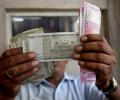
Government sources clarify that the 0.4% merchant discount rate (MDR) on UPI transactions above Rs 2,000, effective October 15, will not be passed on to consumers. The charge, paid by merchants, aims to create a sustainable revenue framework for the digital payments ecosystem, with funds shared among banks and UPI entities. Small merchants using QR codes for up to Rs 1 lakh monthly are exempt.

India's cement industry is on the brink of an oversupply situation as aggressive capacity expansion by major players is set to outpace demand growth over the next two financial years, potentially leading to pricing pressures and moderated utilisation rates.

The National Stock Exchange of India's (NSE) mega Rs 22,569-crore initial public offering (IPO) opened for subscription, receiving 9 per cent bids on its first day, with strong participation from anchor investors.
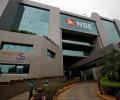
The National Stock Exchange (NSE) has set its initial public offering (IPO) price band at Rs 1,700-1,785 per equity share, with the subscription period running from September 17 to September 21, aiming to raise up to Rs 22,569 crore.

If a bank sold the policy, complain to its grievance cell and, if necessary, escalate the complaint to the Reserve Bank of India Ombudsman.

The Mumbai-Delhi air route, the country's largest and most lucrative, is witnessing an intense battle for supremacy between IndiGo and the Air India group, with Akasa Air emerging as a significant third player, according to recent data.
The National Stock Exchange of India's initial public offering (IPO) was subscribed 5.69 times, with qualified institutional buyers (QIBs) showing the strongest demand, as the Rs 22,561-crore issue moves towards allotment and a planned listing on the BSE.

A new Merchant Discount Rate (MDR) on UPI transactions above Rs 2,000, effective October 15, could force small merchants and price-sensitive consumers to revert to cash, according to economic think tank GTRI. The move, which introduces a 0.4 per cent MDR with a Rs 300 cap and concessional rates for specific categories, is questioned by GTRI founder Ajay Srivastava, who suggests it's not a revenue issue for the government but potentially a response to US pressure regarding UPI and RuPay's preferential market position.

BAFs seek to offer a smoother experience across market cycles, not the full upside of a bull market.

Indian benchmark indices Sensex and Nifty surged in early trade, with the Sensex jumping nearly 700 points, primarily driven by strong buying in IT stocks following TCS's positive June-quarter results and optimistic demand outlook. Track Sensex, Nifty on July 10, 2026.

Apple's upcoming iPhone 18 lineup is set to cost 20 to 43 per cent more in India, primarily due to rising global memory component costs and a depreciating rupee, while the new foldable iPhone Duo will be priced between Rs 3 lakh and Rs 4.5 lakh, matching the cost of some hatchback cars.

'UPI has been free since Covid, so why is the government charging us now?'

The Insurance Regulatory and Development Authority of India (Irdai) has proposed a phased reduction in the expenses of management (EoM) limits for insurers, aiming to lower the overall cost of insurance and enhance returns for policyholders. The proposals also include a new framework for commissions, stricter measures against mis-selling, and mandatory cost audits.

The company has also started scouting for land for a new plant, as it plans manufacturing capacity beyond its immediate volume requirements.

Samsung has expanded its budget smartphone line-up with the launch of the Galaxy A07s in select global markets. Available through the company's website, the new handset comes in three colour choices and two RAM and storage variants, bringing a fresh option to the affordable smartphone segment.

India's total goods trade with BRICS nations more than doubled from FY21 to FY26, reaching USD 417.5 billion, but a significant surge in imports, particularly from China and Russia, has caused India's trade deficit with the bloc to more than triple, reaching USD 226.1 billion.

Trade and business associations across India are organising a 'No UPI Day' on October 2 to protest the upcoming 0.4 per cent merchant discount rate (MDR) on Unified Payments Interface (UPI) transactions exceeding 2,000, effective from October 15.

Apple's latest flagship smartphones, the iPhone 18 Pro and iPhone 18 Pro Max, have gone on sale across India, drawing massive queues and creating a 'festival' atmosphere among eager buyers at Apple Stores in Noida, Bengaluru, and Maharashtra.

India needs to move beyond ease and cost of doing business and focus on the "speed of doing business" as the next leg of reforms to sustain economic growth and private investment, Confederation of Indian Industry (CII) President R Mukundan said.

Smallcap funds topped the net inflow chart for the second consecutive month, as investors poured record Rs 7,973 crore into one of the best-performing MF categories.
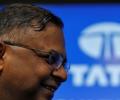
The Tata Sons board has voted to reappoint N Chandrasekaran as chairman for a third five-year term, a decision influenced by the Reserve Bank of India's rejection of the company's application to surrender its NBFC registration, which revives the prospect of a stock market listing.

'...but should prepare for listing unless a court grants effective interim relief.'

Aastha Kunj Park in southeast Delhi is under intense scrutiny following the alleged gangrape of a 17-year-old girl by men posing as police personnel. The incident has brought to light significant security deficiencies, including broken boundary walls, unmanned gates, and poor lighting, raising serious concerns about public safety in the sprawling green space.

Indian benchmark indices, Sensex and Nifty, experienced declines in early trade due to a surge in crude oil prices and significant selling pressure on bank stocks, impacting overall investor sentiment. Track Sensex, Nifty on July 22.

Indian stock markets, including the Sensex and Nifty, experienced their third consecutive day of declines, driven by a global selloff, escalating tensions in West Asia, and a subsequent rise in crude oil prices.

Tata Motors has launched the Sierra Legend Series, a new line of its iconic Sierra mid-SUV, designed to democratize premium features across all variants. This strategy, dubbed "Luxury, From The Base," aims to challenge traditional industry norms by offering high-end comfort, refinement, and technology even in entry-level models, ensuring the Sierra remains a benchmark in the competitive Indian automotive market.

Indian mutual fund holdings in overseas equity securities increased by 37.5 per cent year-on-year to approximately '93,602 crore by March-end, according to RBI data. This growth is attributed to mark-to-market gains from a global market rally and heightened investor interest, with the US remaining the primary destination for these investments.

India's exports saw a significant increase of 26.12 per cent to USD 43.81 billion in August, leading to a narrowed trade deficit of USD 26.86 billion, driven by strong demand from key global markets and diverse sectors.

Within days of the RBI's letter to Tata Sons that its CIC deregistration application had been rejected, the regulator filed a caveat in the Bombay High Court so that it could be heard before any order is passed on the matter in case there's a petition challenging its listing directive.

Maruti Suzuki India announced a price hike of up to Rs 20,000 on select models, effective from September 2026, marking its third increase since May, citing continuous increases in input costs and inflationary pressures.

Samsung India Electronics has initiated job cuts in its Consumer Electronics (CE) division, laying off 8-10 mid-to-senior-level employees with plans to let go of another 40-50 staff. This move is part of a cost-rationalisation exercise driven by rising input costs, muted consumer demand, and intense competition from rival Korean and Chinese players.

US President Donald Trump asserted that Iran is attempting to remove him from office, believing a Democratic administration would permit them to develop nuclear weapons. Trump vowed to prevent Iran from acquiring nuclear capabilities and stated he has no regrets about his confrontational approach, claiming he would act the same way again. He also linked the ongoing conflict to rising stock markets and oil prices, and controversially suggested renaming the Strait of Hormuz.

Foreign portfolio investors (FPIs) turned net sellers in the first week of September, withdrawing Rs 7,443 crore from Indian equities, driven by rising crude oil prices, increasing US bond yields, and a strong dollar.

The Indian government has mandated that banks and payment providers cannot levy charges on UPI transactions up to Rs 2,000 or on payments made via RuPay debit cards. This directive follows an amendment to the Payment and Settlement Systems Act, 2007, aiming to sustain and expand the digital payments ecosystem.
